Brazil celebrates World Cotton Day after harvesting a record crop of more than 4 million metric tons, while the sector highlights the fiber’s role in the country’s economy, culture and international trade
On October 7, World Cotton Day, Cotton Brazil celebrates the importance of the fiber and its entire production chain in different parts of the world. In Brazil, the celebration gains momentum with the “Naturally Around” campaign, an invitation to look at Brazilian cotton not as a commodity, but as a natural fiber that is present at every stage of life in the country from the fields to the economy, from culture to the clothes we wear.
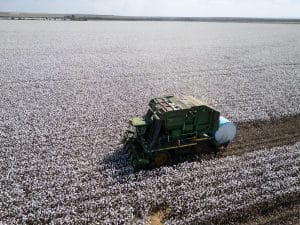
The celebration comes as Brazil closes a record cotton crop. According to estimates by Abrapa and Cotton Brazil, the latest crop harvested in the country surpassed 4 million metric tons, reinforcing Brazil’s position among the world’s leading cotton producers and exporters.
Representatives from every stage of the supply chain have been engaged in celebrating the date since 2021, when it was formally proclaimed by the United Nations (UN) General Assembly.
As part of the World Cotton Day celebrations, Cotton Brazil is also engaging Brazilian embassies in several countries to help bring the message of Brazilian cotton to international audiences and highlight the importance of dialogue and cooperation across the global cotton value chain.
Abrapa, the Brazilian Cotton Growers Association will also take part in the regional virtual celebration for Latin America and the Caribbean promoted by the Food and Agriculture Organization of the United Nations (FAO). In 2026, World Cotton Day is celebrated under the theme “Cotton for the Common Good: Building Prosperity through Trade, Transformation and Collaboration,” emphasizing the role of cotton in economic development, international trade and cooperation.
Brazil in the global cotton market
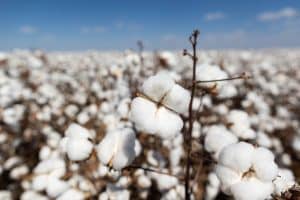
Brazil currently holds a prominent position in the global cotton market. It is the world’s largest exporter and third-largest producer of the fiber, as a result of an efficient and technologically advanced production chain that extends from planting to processing, with quality control at every stage.
The vertical integration of the supply chain is also a competitive advantage for the country compared with other major global producers. Today, Brazilian cotton is the main natural raw material used by the domestic textile industry, with around 720,000 metric tons consumed per year.
With production concentrated in the Cerrado, Brazilian cotton farming also stands out for its rainfed production system – predominantly relying on rainfall – which reduces pressure on water resources and reinforces the sector’s commitment to more sustainable production practices. This is one of the pillars of the ABR (Responsible Brazilian Cotton) certification, which has existed since 2012 and certified 79% of Brazilian cotton in the 2024/2025 crop season.
The many ways cotton is present
Created especially for the occasion, the “Naturally Around” campaign proposes looking beyond the numbers and invites those working throughout the cotton supply chain, as well as end consumers, to recognize the fiber’s presence at different moments of everyday life.
“Cotton, and Brazilian cotton in particular, carries a responsibility that goes beyond the fields: it is present in the clothes we wear, in the income we generate in rural and urban areas, and in the concrete alternative we offer in the face of the environmental impacts of synthetic fabrics. This is what the ‘Naturally Around’ campaign celebrates in 2026,” says Marcio Portocarrero, executive director of the Brazilian Cotton Growers Association (Abrapa).
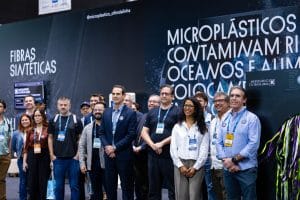
The message is also aligned with the “Hanging by a Thread”, or “Microplástico é o Fim da Linha”, movement, launched by Abrapa together with other natural fiber organizations at the latest Brazilian Cotton Congress (CBA), raising awareness about the environmental impact of microplastics released by synthetic fabrics throughout their life cycle.
According to Abrapa president Gustavo Piccoli, the two campaigns complement each other. “If synthetics represent the end of a problematic cycle, cotton represents a natural, renewable and biodegradable presence in the history of Brazilians.”