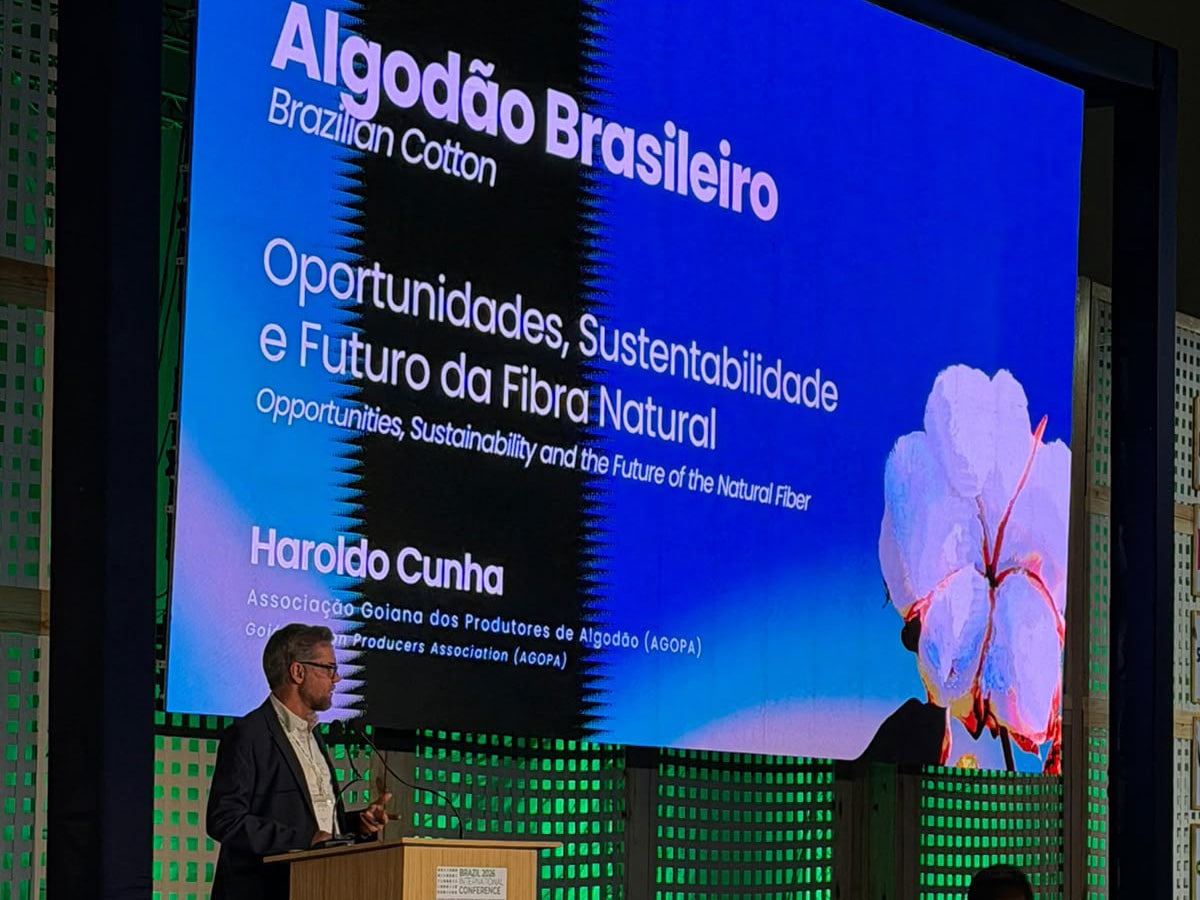
Participation in the event, held in Fortaleza, Brazil, addressed the challenges facing the natural fiber amid changes in the global textile market
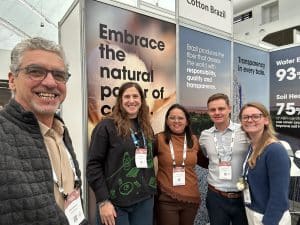
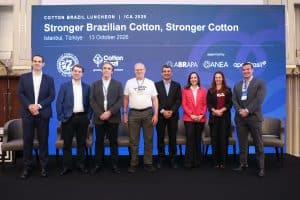
Technological innovation, sustainability, and changes in global fiber consumption were at the center of discussions at the 2026 Brazil International Conference, held on October 14 and 15 in Fortaleza, Brazil. Cotton Brazil took part in discussions on the challenges of increasing cotton’s competitiveness amid the rise of synthetic fibers and new demands from the textile industry.
Organized by the Brazilian Textile and Apparel Industry Association (Abit), in partnership with the International Textile Manufacturers Federation (ITMF) and the International Apparel Federation (IAF), the congress brought together business leaders, government officials, and representatives of national and international organizations under the theme “Future in Motion: Transformation, Innovation, and New Realities.”
Looking to the future
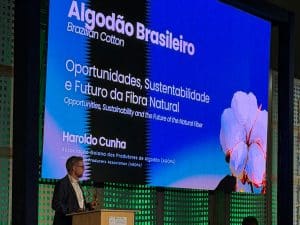
During the panel “The Future of Fibers,” Haroldo Cunha, cotton producer and former president of the Brazilian Cotton Growers Association (Abrapa), presented the evolution of Brazilian cotton farming and highlighted the need to prepare the sector for a market that is increasingly demanding in terms of the origin, quality, and sustainability of raw materials.
“We had the opportunity to talk about Brazilian cotton, its journey so far, and how we are looking to the future. We talked about traceability, sustainability, innovation, and meeting consumer needs to conclude that these are concerns that extend across the entire textile industry. These common issues make people think about the future with a focus on sustainability and, above all, circularity,” Cunha said.
According to a 2025 Textile Exchange report presented by Cunha, around 40 years ago, cotton accounted for more than half of the global fiber market. Today, its share stands at around 22%, while synthetic fibers, produced mainly from fossil-based raw materials, have come to dominate the market. “Some of the factors that explain this transformation include cost competitiveness, changes in fashion, and the functional characteristics of synthetic fabrics,” he noted.
Cunha also emphasized that the goal is to preserve cotton’s attributes, such as comfort and well-being, while incorporating characteristics valued by consumers, such as greater resistance to wrinkling and fading.
“Understanding what consumers want in a world that is increasingly demanding in terms of traceability, circularity, reuse of natural resources, and more efficient use of these resources is an issue that will dominate discussions and strategic actions in the coming years,” he stated.

Natural fibers and sustainability
Another topic addressed was the growing concern over microplastics released by synthetic materials during use, washing, and disposal. The presence of these particles in the environment and research into their potential impacts on human health are broadening the debate on the composition of textile products and may represent an opportunity to increase the value placed on natural fibers.
According to Cunha, cotton’s progress will depend on a combination of innovation, communication, and public policies, as well as sustainability assessments that consider the entire life cycle of raw materials, from production to final disposal.