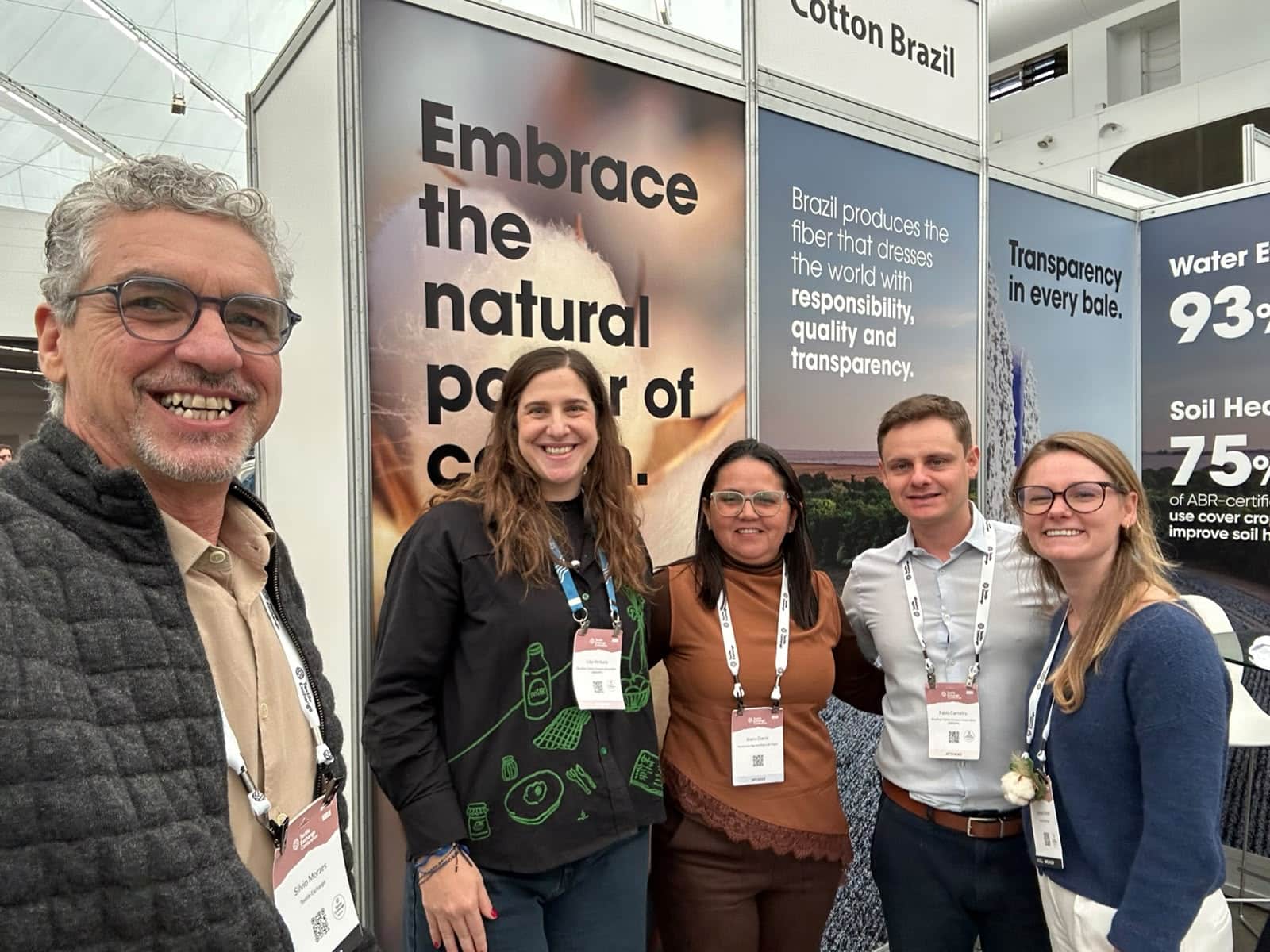
Participation in the international conference in Vancouver showcases results from the ABR program and reinforces the importance of sustainability and traceability for the global market
Cotton Brazil participated in the Textile Exchange Conference 2026, held this October in Vancouver, Canada. The event brought together experts and representatives from the fashion, textile, and apparel industries from different countries to share knowledge and discuss new ways of producing, selecting, and reusing materials, with a focus on more sustainable practices across the sector.
Brazil’s participation, with a particular focus on the ABR program, demonstrated how the country is already putting into practice the theme of this year’s edition, “The Implementation Era”: turning sustainability commitments into verifiable actions at scale.
According to Fábio Carneiro, Head of Sustainability at the Brazilian Cotton Growers Association (Abrapa), in the 2024/25 crop season, 3.35 million tonnes of cotton lint were ABR-certified and Better Cotton-licensed, representing 79% of the 4.25 million tonnes produced in the country. This production came from 469 production units across 97 municipalities in ten states.
“What sets Brazil apart is that certification is not limited to a niche market. Participation has grown from 47% in the 2010/11 crop season. Brazil accounts for more than one-third of all Better Cotton-licensed cotton worldwide (2023/24 data), and the protocol requires continuous improvement, with the minimum compliance threshold increasing from 85% to 90% by the fourth crop season. For brands, this means being able to source large volumes with independent verification, rather than relying on small pilot projects,” he says.
Brazil also presented the ABR program’s first GRI Sustainability Report at the event, published in the first half of 2026.
Certification and sustainable practices
According to Abrapa’s Head of Sustainability, advances in certification and the supply of Brazilian regenerative cotton are attracting interest from international organizations.
“ABR is not a regenerative certification, but it already incorporates key aspects of this discussion: soil health, integrated pest management, biodiversity conservation, water resource management, and climate change adaptation and mitigation. No-till farming, which aims to reduce costs and conserve soil, is a practice studied by Embrapa and adopted by cotton growers in the Cerrado region. Brands want to know how these practices translate into measurable results,” he explains.
Beyond the scale of certification, Brazil also stands out for the implementation of sustainability practices in the field, supported by specialized teams from state cotton growers’ associations, comprising agronomists, agricultural technicians, and occupational safety professionals. The social impact of cotton production is also significant: in the 2024/25 crop season, the sector generated more than 43,000 direct formal jobs, with women accounting for 12% of the workforce and 515 positions held by workers with physical disabilities.
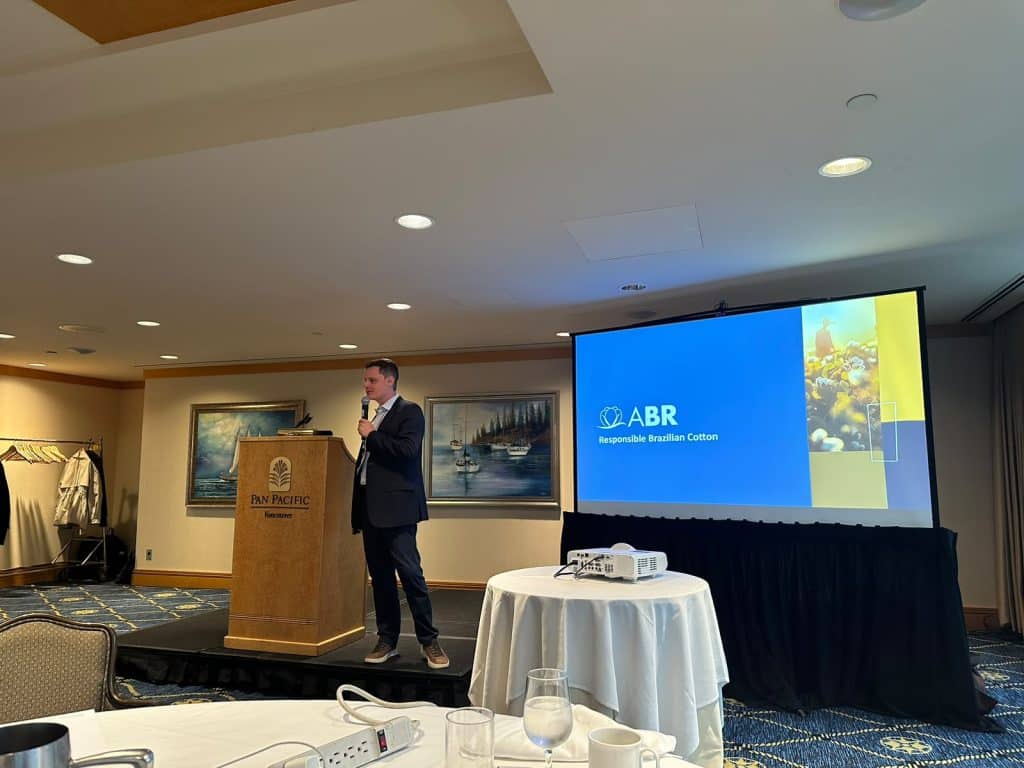
Dialogue with the international market
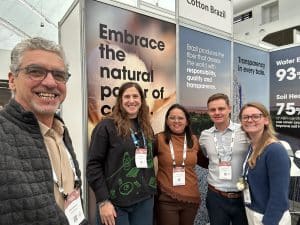
According to Lisa Ventura, Head of International Partnerships at Abrapa, participation in the conference also provided an opportunity to present Brazil’s advances directly to brands, retailers, and international organizations. In addition to meetings and presentations, Cotton Brazil had a booth at the event, where visitors could learn about sustainability initiatives and experience Brazilian cotton traceability firsthand through garments featuring digitally accessible information.
“What really surprised us is that many don’t realize how advanced our traceability is. So it gave us great pride to show and explain. We had some T-shirts here that they could scan and really see how, when we talk about traceability, we mean this up to the farm. There was a great focus on ABR, how rigorous its protocol is, and, of course, some areas for improvement. But many were surprised to see how much good news was coming from it,” she highlighted.
Sustainable practices adopted on Brazilian farms also attracted interest. According to Lisa, 84% of farms certified under the ABR program already use biological products for pest and disease control, a figure that gained relevance in discussions about the challenges of production in a tropical climate.
“That’s one thing we heard a lot here across the three days, how sustainability cannot be a one size fits all, and needs localized solutions. And I believe this is something that’s very true in the context of Brazil,” she added.
Turning progress into broader market impact, however, requires action across the supply chain. Brazilian cotton growers have invested in responsible production, verification and traceability. Clearer and more consistent demand from brands and retailers for sustainable, independently verified cotton would help reinforce these efforts, giving producers greater confidence to continue investing and encouraging wider adoption of sustainable practices.
Preparing for future market demands
For Fábio Carneiro, Abrapa’s Head of Sustainability, the conference also represents an opportunity to present the results of Brazilian cotton growers’ investments in sustainability and traceability, while learning from other stakeholders in the global market.
“This is where we gain an understanding of what brands will demand from sourcing countries before these requirements become contractual obligations, including regulatory pressure related to forced labor, due diligence, product data, and environmental claims. We also learn how other cotton-producing countries structure their verification and traceability systems, which climate and regenerative agriculture methodologies are gaining traction, and which data solutions could be useful for ABR,” he said.
“Cotton growers in Brazil benefit from a reputation built on evidence, a supply chain that is better prepared for future requirements, and direct dialogue with buyers, certification bodies, and partners,” he concluded.