
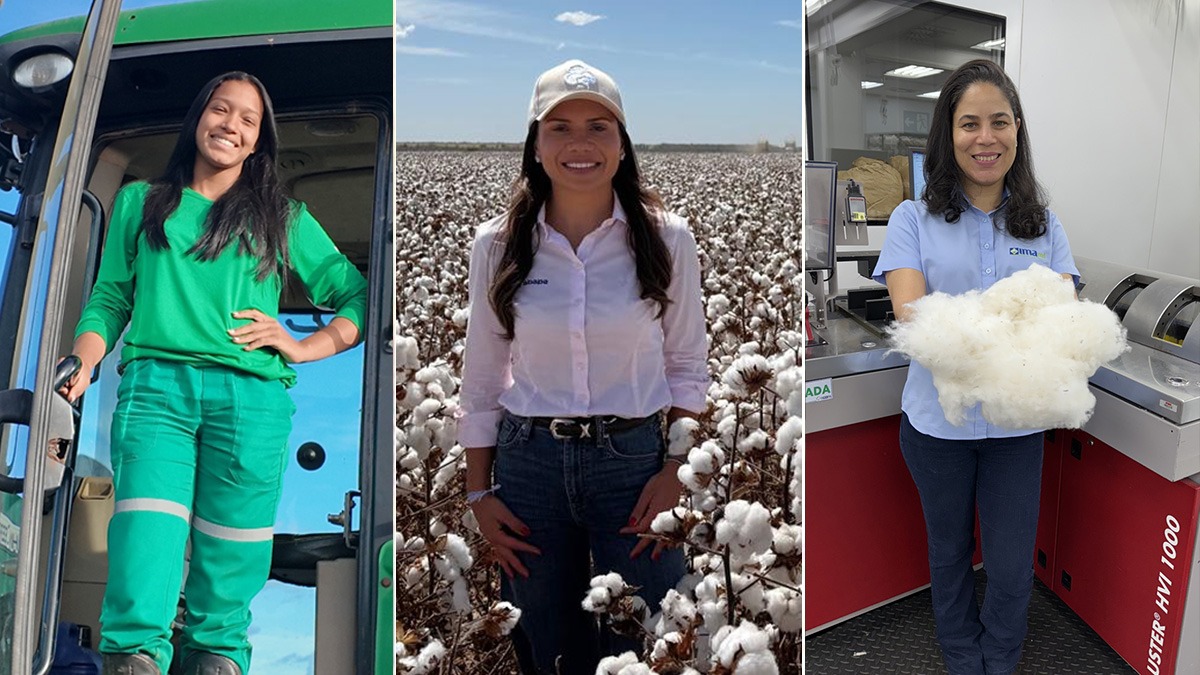
From technology to the field, women are expanding their presence and helping project Brazilian cotton production onto the global stage
Girl power in the truest sense of the word. These women are part of the force driving Brazilian cotton onto the global stage, showing how women are increasingly carving out their place in cotton production — whether in academic, administrative, or operational roles.
According to data from the Brazilian Textile and Apparel Industry Association (Abit) and IEMI – Market Intelligence, 70% of the workforce in Brazil’s textile chain is female. And judging by the commitment and talent of these women, that number has every reason to grow even further.
On March 8, International Women’s Day, Cotton Brazil brings powerful and inspiring stories to honor those who are part of this journey.
“It’s our achievement”
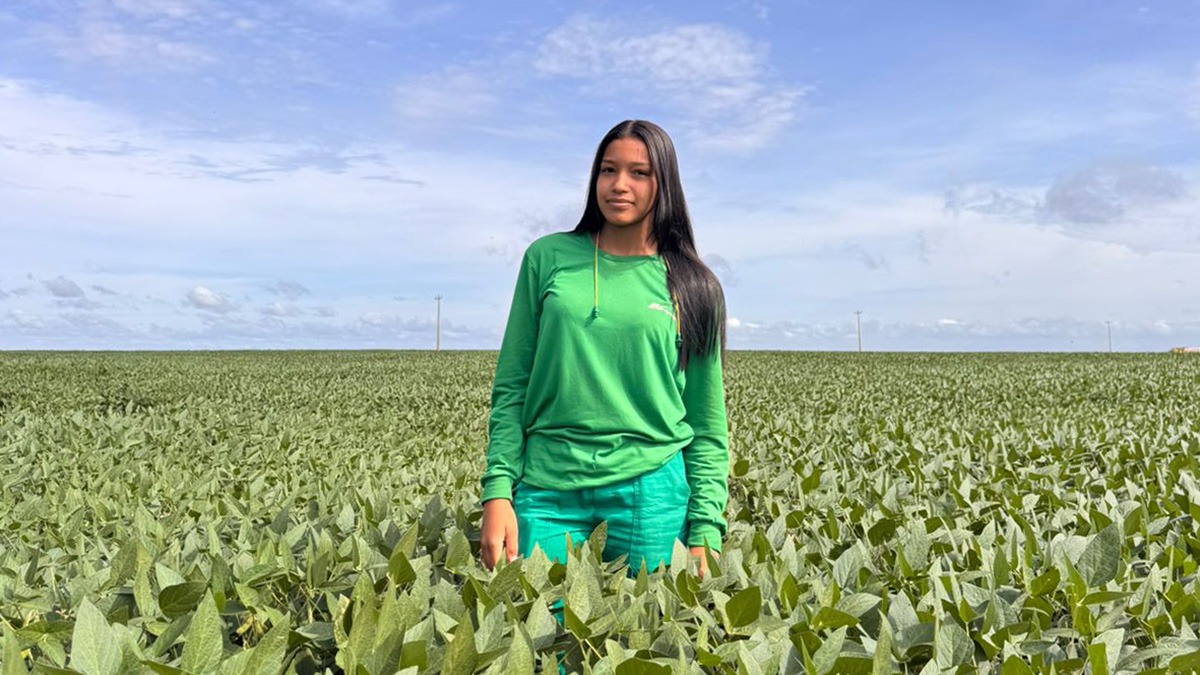
She became widely known on social media late last year, when a video of her driving a high-power tractor through a cotton field in the state of Maranhão, Brazil, went viral. The video reached more than 2 million views. What might seem unusual to many is simply part of the daily routine for Ilana Dourado, a 20-year-old machine operator. More than that, it represents the strength of women working in the sector.
In the same year that the Food and Agriculture Organization of the United Nations (FAO) established the International Year of the Woman Farmer, Ilana stands as an example of how women’s presence has been expanding across the sector, regardless of the segment of the production chain.
“The opportunity to work as an operator came along my path when I started working on the farm. It was a great opportunity and I embraced it,” she says.
But those who think the job is limited to simply driving machinery during harvest are mistaken. In “Field 207,” a plot at Fazenda Potência, part of the SLC Group in Balsas (MA), the operator’s routine requires technical precision and mastery of technology.
“When you’re just starting out, everything is complicated. You don’t know anything. Along the way you learn. The biggest challenge was overcoming fear,” she recalls. On productive days, she operates planting across up to 130 hectares of cotton.
Breaking stereotypes
Earning her place in a sector still largely dominated by men was not easy for Ilana. “I had to ask a lot of questions to get where I am today. Now I have my space and people respect me. That’s the best achievement I could have,” she says proudly.
An inspiration for many women seeking to break stereotypes in the field, the machine operator believes the future holds an even stronger female presence. “I’m sure this path isn’t just for men. It belongs to both men and women. All it takes is determination. Just as men can do it, women are also capable,” she says.
“I see many women starting down this path and I hope they keep going. You learn, and when you know something, you teach others. I’m very happy to have them working in the same field as me. Whether people realize it or not, it’s our achievement. Everything we accomplish in this male-dominated environment is our achievement,” she concludes.
“Competence, commitment and dedication have no gender”
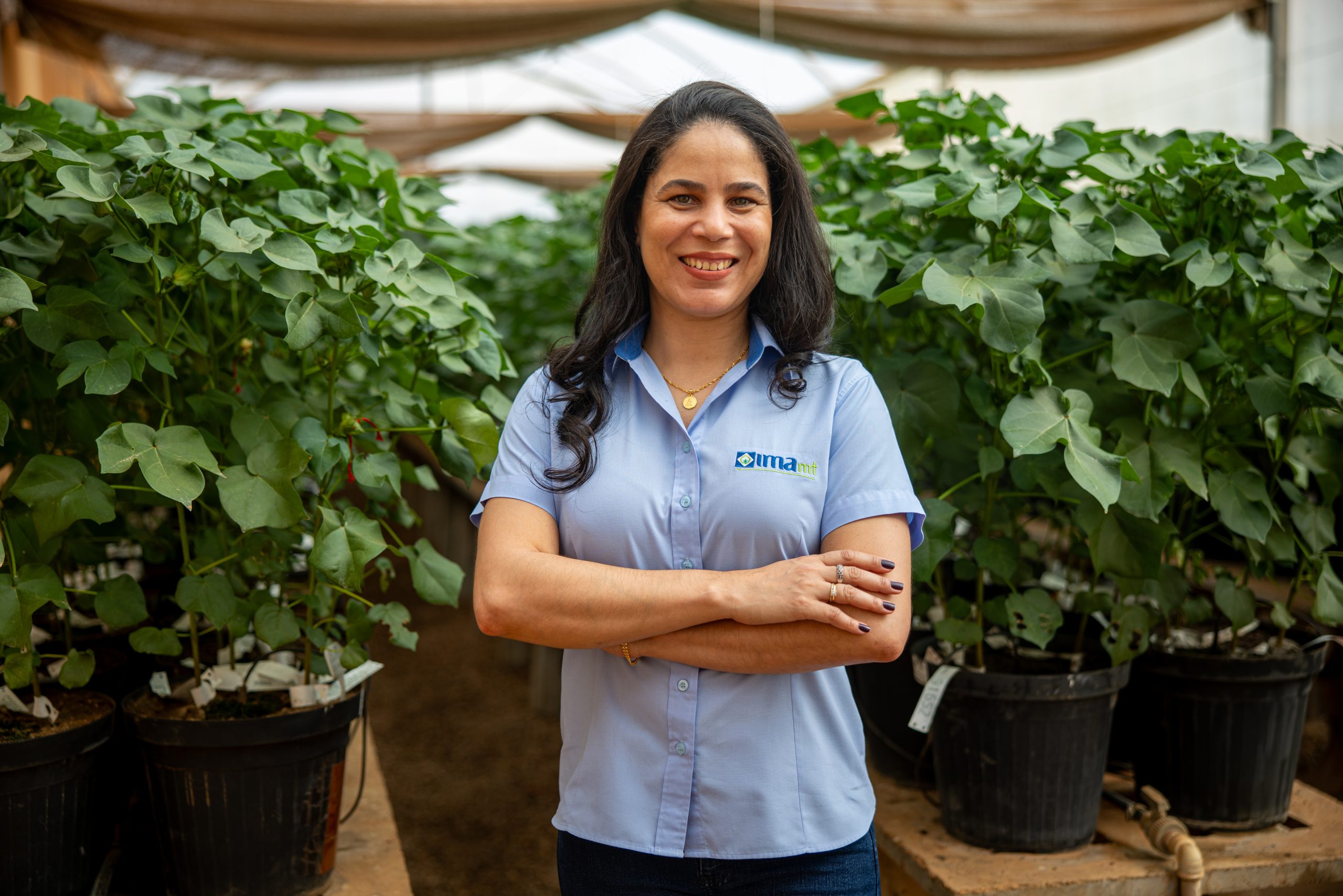
Women’s presence is also growing in research within cotton production. One of the professionals representing this movement is Lorenna Lopes de Sousa, who works in cotton fiber quality at the Mato Grosso Cotton Institute (IMA).
With a degree in Biology, Lorenna has experience in Genetics and Plant Breeding, with emphasis on Molecular Biology, Structural and Functional Genomics. She has built a strong academic background, including experiences at Michigan State University and the University of California, Davis.
During her undergraduate studies, she had her first contact with research through a scientific initiation scholarship. Curious, persistent and disciplined — essential traits for the profession — she quickly fell in love with the field and decided to pursue it.
“What fascinates me most about the technical and scientific side of cotton production is understanding how everything is interconnected, from plant genetics to the final quality of the fiber. Our work goes beyond generating data — it helps guide decisions in the development of new cultivars. This integration between science and practical application is what makes the field so fascinating and rewarding to me,” she says.
For Lorenna, being a female professional in a technical and scientific role within agribusiness is both challenging and transformative. “Agribusiness still carries a male-dominated culture, especially in technical areas. Because of this, women often have to demonstrate competence more firmly, earn space through consistency, and position themselves with confidence,” she explains.
Preparation and responsibility
The researcher believes women’s participation in the sector has grown, but some resistance still remains. “Reducing gender inequality is not important only for equity. It also directly impacts the quality, relevance and innovation of science and technology,” she says.
“Even today, women represent less than one third of researchers worldwide, which shows there is room and a need to expand this participation. It is essential to understand that women — whether in agribusiness or any other field — are not adversaries of men, but partners. Competence, commitment, dedication and results have no gender; they require preparation and responsibility in what we do,” she adds.
Researchers such as American scientist Barbara McClintock, winner of the 1983 Nobel Prize in Physiology or Medicine, and Brazilian scientist Mariangela Hungria, awarded the 2025 World Food Prize, often referred to as the “Nobel Prize of Agriculture,” are among Lorenna’s inspirations.
“To reach where you want to go, you will face many ‘no’s’ and some setbacks along the way. We should see every ‘no’ as motivation to improve and every fall as an opportunity to become stronger. It is in those moments that you develop the strength needed to reach your goals,” she advises.
“Women’s presence is a growing reality”
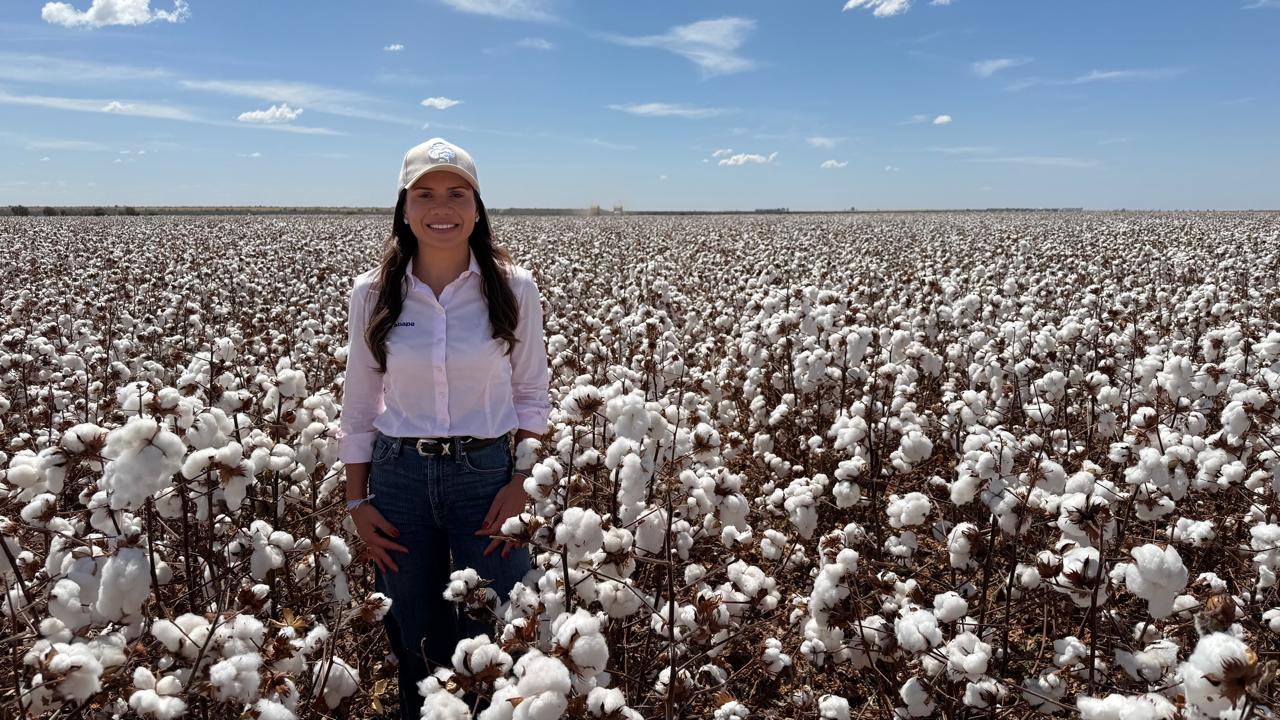
More and more women are also occupying leadership positions within Brazil’s cotton sector. One of the prominent names in this movement is rural producer Alessandra Zanotto Costa. A managing director at Grupo Zanotto, a cotton and soybean producer in western Bahia, she currently serves as president of the Bahia Association of Cotton Producers (Abapa) and the Bahia Cotton Development Fund (Fundeagro), after building a solid and widely recognized career in cotton production.
The daughter of farmers who migrated from Rio Grande do Sul to western Bahia, Alessandra began working at Grupo Zanotto at a young age, where she took on operational responsibilities and helped professionalize farm management.
Her connection with the cotton sector grew stronger through participation in industry events, assemblies and Abapa meetings. Her involvement in sector associations led, in 2017, to an invitation to join the organization’s board as financial director. After that term and a period serving as vice president, she assumed the presidency of the association.
“Leading Abapa is not a title. For me, it is an honor and, above all, a great responsibility. I have deep respect for the association’s history and everything that has been built so far, as well as for the trajectory of cotton production in Brazil. It makes me fully aware of the magnitude of this responsibility — far more than the visibility of the position,” she says.
Her connection to cotton also has a personal dimension. “It was because of cotton that I professionalized myself, entered new spaces, met new people and brought new processes into my company. I have a great love for this crop,” she adds. Alessandra is also a member of the Sou de Algodão movement, an initiative dedicated to promoting Brazilian cotton.
Structural progress
Speaking about women’s presence in agribusiness, Alessandra acknowledges that the sector still carries the historical perception of being predominantly male, especially in decision-making spaces.
“But there is an important difference: women’s presence is no longer an exception — it is a growing reality. Unfortunately, there is still silent resistance, isolation in strategic environments and the expectation that women must prove more, deliver more and make fewer mistakes.”
“At the same time, I see structural progress: women managing farms, working in research centers, in trading companies, leading multinationals and occupying institutional positions. The question is no longer whether women will participate, but at what pace and with what level of preparation,” she adds.
Alessandra also points to three strategic fronts for expanding women’s participation: governance and management, innovation and sustainability, and communication and sector reputation. “Brazilian cotton is now a global powerhouse. If we want to remain competitive in a scenario of increasing regulatory pressure, diversity is not a social agenda — it is strategic intelligence,” she says.
Stories like those of Ilana, Lorenna and Alessandra show that women’s presence in Brazilian cotton production is not only growing — it is essential for the future of the sector. Whether in the field, in science or in institutional leadership, women are expanding horizons, bringing new perspectives and helping make Brazilian cotton increasingly competitive, innovative and connected to the world.