
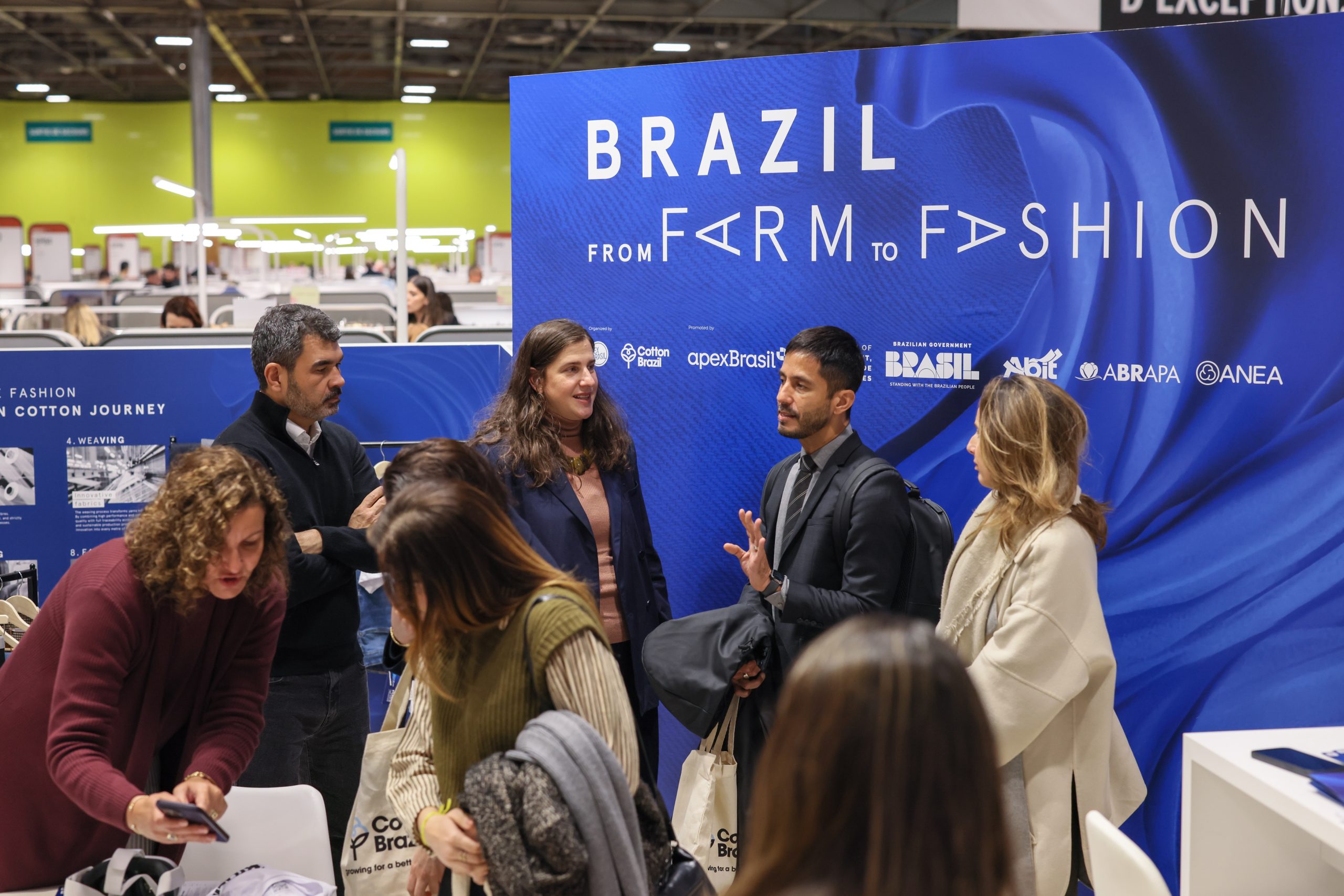
Debuting at the fair, Brazilian cotton takes a step toward global recognition
“Brazil today is a major player in the textile sector, with cotton in a prominent position, and we need to make it clear to the market that we’re here to stay.” With this message, the Director of International Relations at the Brazilian Cotton Growers Association (Abrapa), Marcelo Duarte, concluded Cotton Brazil’s first participation in Première Vision Paris 2026, held from February 3 to 5. The group’s presence marks an important step in the Brazilian program’s strategy to get closer to brands, designers, and the end consumer.
Première Vision Paris is one of the world’s leading international trade fairs for the textile industry. Brazil was prominently represented through Cotton Brazil, an initiative led by Abrapa in partnership with ApexBrasil, the Brazilian Trade and Investment Promotion Agency, and Anea, the National Association of Cotton Exporters, alongside Abit, the Brazilian Textile and Apparel Industry Association.
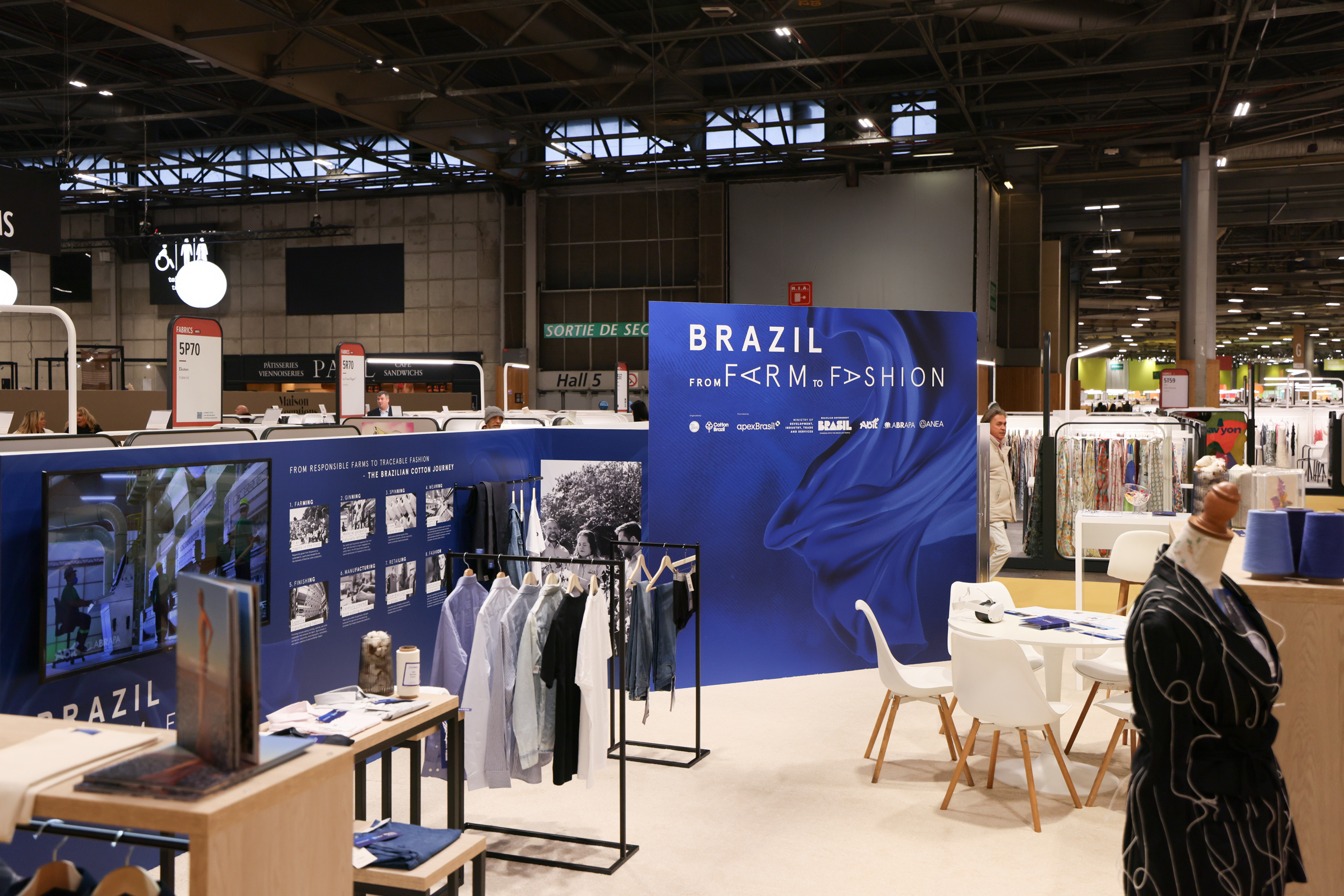
The Brazilian delegation presented a special stand at Première Vision Paris under the theme “From Farm to Fashion,” connecting Brazilian cotton farms with international brands and retailers. The aim was to showcase how the Brazilian production chain is built on the pillars of sustainability, traceability, and quality. “The textile industry, and the cotton sector in particular, is extremely complex and dynamic — it doesn’t end at spinning; it ends at the store, in retail, at the brand,” emphasized Duarte.
According to International Partnership Lead Lisa Ventura, the group’s presence at the fair reflects the unity and alignment of the Brazilian textile sector: “Cotton Brazil wants to show not only its innovation and its quality, but all of its efforts and true progress on sustainability. We want to be in Paris at Première Vision to meet with many brands and retailers from Europe and beyond, to explain all of the progress we have made and also invite them to come to Brazil to see everything we are doing there.”

Quality Production
Over the three-day event, Brazil also took part in the talk “From Farm to Fashion: A Tradition of Innovation Across the Brazilian Textile Value Chain”, highlighting the value of its cotton. Brazil now holds a strategic position in the global market, and Duarte emphasized the need to clearly communicate the country’s ability to deliver consistent, sustainable, and high-quality production. “We are ready to establish partnerships, better meet retail demands, and increasingly contribute to blends, new fabrics, and technologies, so that Brazilian cotton continues to enjoy strong and growing demand,” he stated.
Fernando Pimentel, Managing Director at Abit, who also participated in the talk, noted that Brazil’s presence at the event opens new opportunities for export, integration, and collaboration. “Brazil is setting an example here with the producers of the largest raw material we have in our territory, a raw material that is heavily exported. But we want to increasingly add value within Brazil and incorporate more elements that enhance Brazilian fashion,” he summarized.
Traceable Cotton Garments
At the Cotton Brazil stand, visitors had the opportunity to explore traceable garments from SouABR, one of the world’s few complete farm-to-fashion, full-physical traceability programmes. In 2025, 319,647 garments were traced, further establishing the initiative as a concrete tool for transparency and enhancing the value of Brazilian cotton through strong sustainability claims. Key Brazilian retail brands, including Calvin Klein, C&A, Reserva, Renner, YouCom, Almagro, Döhler, and Veste S.A., are already part of the programme.
Among the looks showcased at the stand, pieces from the latest São Paulo Fashion Week (SPFW) stood out, designed by designers such as Fernanda Yamamoto, Weider Silveiro, and Alexandre Herchcovitch. These creations showcase Brazil’s versatility, quality, and creative potential, while reflecting responsible production practices and strengthening the national textile industry.
Mercosul-UE Agreement Opens New Opportunities for Brazilian Textiles
Alongside Cotton Brazil’s efforts to expand its market and engage with brands, designers, and consumers, a new chapter is set to boost partnerships and Brazilian textile exports. Signed on January 17 in Paraguay, the Mercosur-EU agreement is expected to strengthen bilateral trade and enhance the competitiveness of Brazilian products.
For the textile sector, the deal is strategic, as it gradually reduces import and export tariffs, which currently exceed 90% between the blocs, paving the way for greater presence of Brazilian cotton and textiles in the European market. Although signed, the agreement will still undergo review by the EU Court of Justice to ensure legal compatibility with other treaties — a process that typically takes around 17 months.