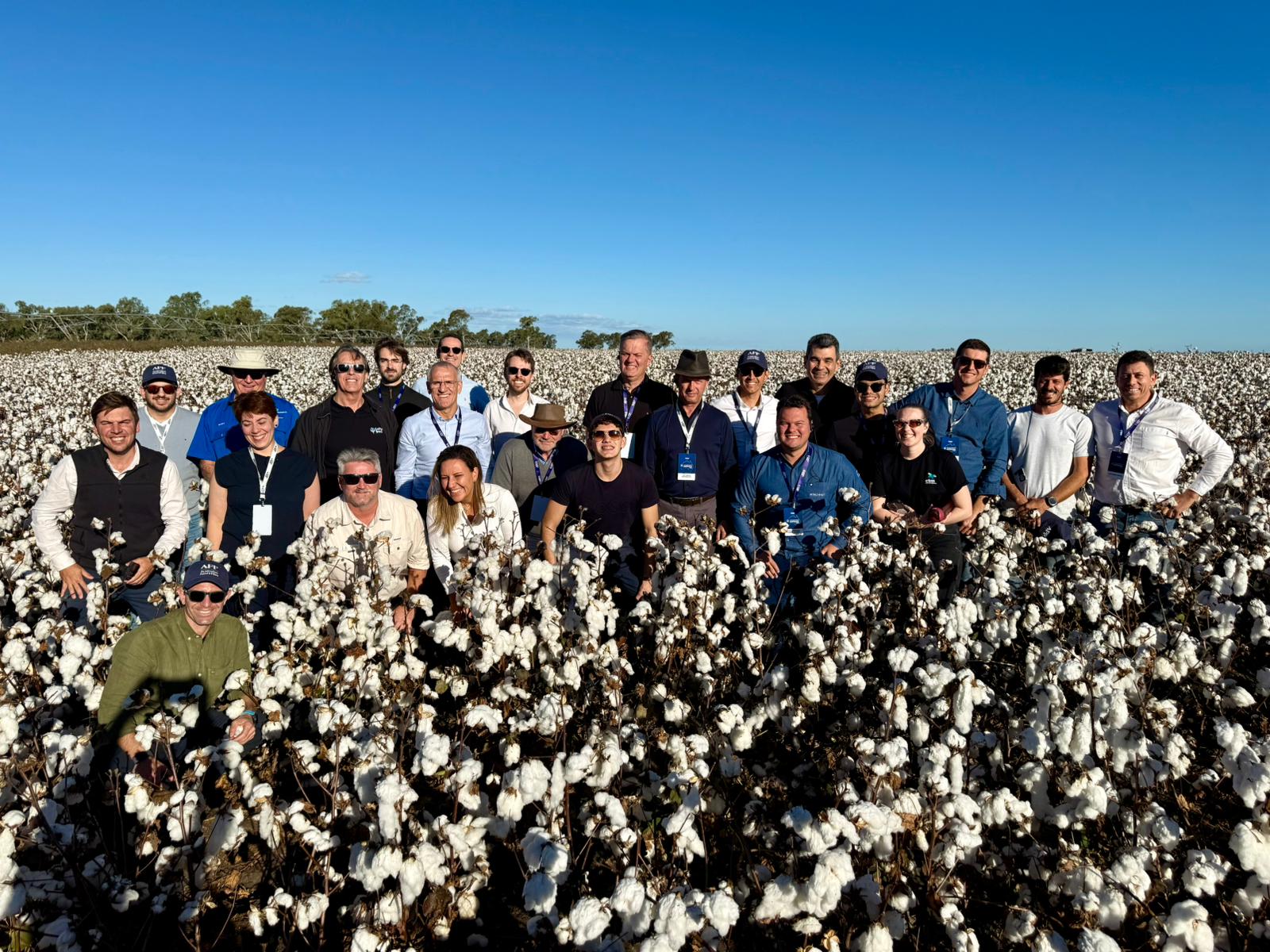
Cotton Brazil 2026 promoted technical exchanges on production, research, logistics and sustainability between representatives from both countries
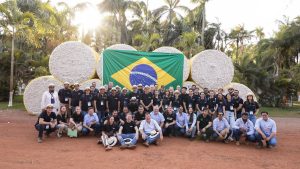
Cotton Brazil has concluded the international Cotton Brazil Dialogues Australia 2026 trip, which included technical visits and institutional meetings across some of Australia’s leading cotton-producing regions. The program brought together representatives of the Brazilian cotton sector for a technical exchange focused on production, research, logistics, sustainability and market development, further strengthening the relationship between two of the world’s largest cotton exporters.
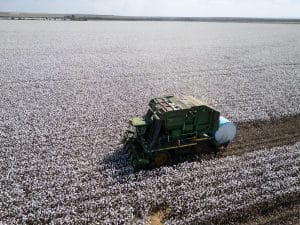
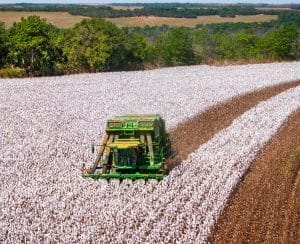
Throughout the itinerary, participants visited farms, research centers, ginning facilities, fiber classification operations and logistics hubs, gaining firsthand insight into the Australian production and export model. The trip covered key cotton-growing locations, including Moree, Wee Waa, Narrabri, Goondiwindi, Dalby, Toowoomba and Brisbane.
According to Marcelo Duarte, International Relations Director at the Brazilian Cotton Growers Association (Abrapa), the most valuable outcome of the trip was the quality of the exchanges that took place throughout the program.
“The trip was called Cotton Brazil Dialogues Australia 2026, and I believe there could hardly have been a more appropriate name. Above all, this was because our Australian counterparts were extremely open and generous in discussing every aspect of their operations in depth, demonstrating remarkable transparency and a genuine willingness to share experiences,” he said.
A model of industry alignment
During the trip, the Brazilian delegation visited some of the leading organizations within the Australian cotton industry, including Sundown Pastoral Company, Australian Food & Fibre (AFF), Cotton Seed Distributors (CSD), ProClass, Queensland Cotton, the Australian Cotton Research Institute (ACRI), the Port of Brisbane and Bayer Crop Science’s laboratory in Toowoomba.
For David Schmidt, a cotton grower from western Bahia, the program provided valuable insight into one of the most distinctive characteristics of Australian cotton production: the strong alignment between research, farming and industry institutions.
“For more than 30 years, they have worked on genetics and crop management practices to ensure the long-term resistance of cotton varieties to pests. This alignment extends well beyond the farm gate and involves the institutions that support Australian cotton production. It is truly a model that can inspire us in Brazil,” he said.
The integration of the value chain was also highlighted by Márcio Santos, CEO of Bayer Brazil, who joined the delegation. “We had the opportunity to experience Australia’s highly efficient integrated ecosystem, spanning genetic research, production, processing and export logistics, while also sharing Brazil’s expertise in large-scale cotton production management. It is clear that together we have significant opportunities to accelerate global consumption of natural fibers,” Santos said
Water, logistics and innovation
Among the topics that attracted the greatest interest from participants were water resource management and the efficiency of Australia’s logistics infrastructure.
According to Juliana de Lavor Lopes, ESG and Communications Director at Amaggi, the Australian model demonstrates the strategic importance of water for agricultural competitiveness.
“Cotton production in Australia is directly linked to water availability, and the cost of this resource is clearly understood and highly relevant to producers. This serves as an important reminder for us in Brazil of the growing need to address water-related challenges and their impact on agricultural competitiveness,” she said.
Juliana also highlighted the logistics operation observed during the visit to the Port of Brisbane.
“The process is highly organized, with strong traceability and a simpler, more efficient operation thanks to a high level of automation. This provides greater security and efficiency in exports and represents an area where Brazil still has opportunities for improvement,” she noted.
Beyond the technical aspects, Juliana emphasized the value of the exchange promoted by the trip. “This is not simply about Brazil learning from Australia. It is about a genuine exchange of experiences. This dialogue strengthens the sector as a whole and contributes to the development of both markets,” she said.
Promoting and defending natural fibers
For Leonardo Celini, Operations Director at SLC Agrícola, the Australian cotton industry stands out for its ability to continuously evolve through a combination of technology, productivity, quality and coordination among different stakeholders. The advances observed during the trip range from genetics and intensive technology adoption to supply chain organization and fiber positioning in international markets.
“One aspect that stands out is the industry’s unity in promoting natural fibers in competition with synthetic alternatives, as well as its highly structured traceability system,” he said.
In his view, the Australian experience reinforces the importance of Brazil advancing strategies aimed at differentiating and adding value to its cotton fiber. Initiatives related to quality, traceability and market promotion are expected to become increasingly important in the competition for international markets.
“As an exporting country, we have a responsibility to deliver the highest quality standards. The path forward is to add value and build a strong brand for Brazilian cotton,” he concluded.