Delegation emphasizes demand growth, market access and international cooperation during global cotton discussions
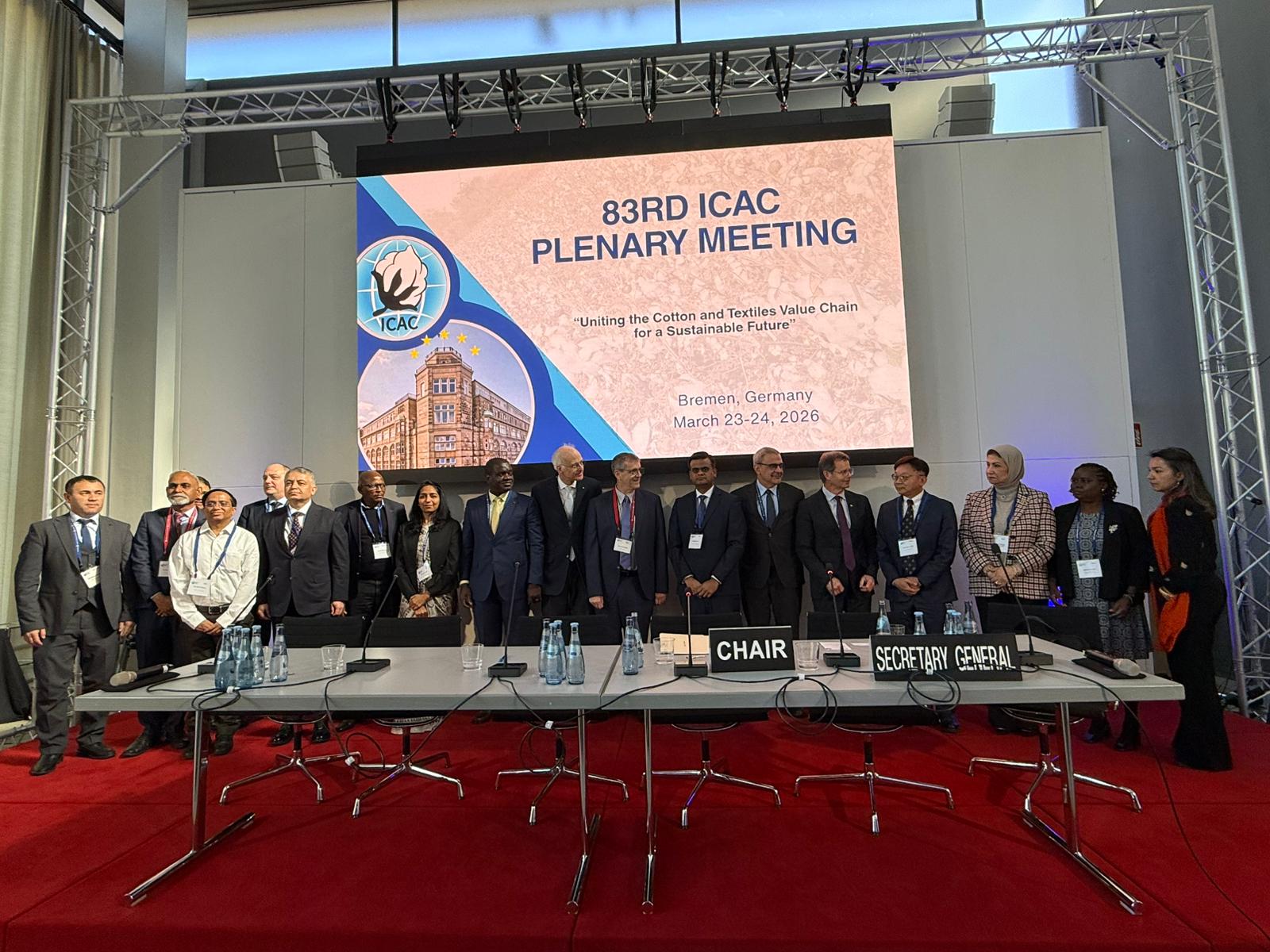
Ahead of the International Cotton Conference Bremen in Germany, the Cotton Brazil and Brazilian Cotton Growers Association (Abrapa) delegation took part in the 83rd ICAC Plenary Meeting and the International Cotton Conference Bremen on March 23 and 24, highlighting their work focused on the quality and sustainability of Brazilian cotton.
Brazil reaffirmed its commitment to the ICAC as a key platform for global cooperation, highlighting its leadership in sustainable cotton production and its focus on boosting demand, strengthening market access, and promoting a fair and transparent cotton market.
“The ICAC fosters a vital space for exchange between countries, enabling the sharing of best practices, innovation, and market perspectives. For Brazil, this collaboration is key to advancing sustainability, expanding opportunities, and strengthening the global cotton value chain,” highlights Abrapa’s Director of International Relations, Marcelo Duarte.
Advancing Sustainable Cotton Production
In his speech at the event, Eduardo Sampaio, Agricultural Attaché in Germany, highlighted that climate change remains a central challenge for cotton production worldwide and that Brazil supports the integration of sustainability across all ICAC activities.
“Climate change remains a central challenge for cotton production worldwide. Brazil supports the integration of sustainability across all ICAC activities. We highlight the importance of promoting the sustainable intensification of cotton production,” said Eduardo Sampaio.
“There are some examples of Brazil’s commitment to sustainable agriculture: no tillage, double cropping, and the National Bioinputs Program, established by the Ministry of Agriculture and Livestock in 2020. Bioinputs include seeds, fertilizers, inoculants, products for plant and animal nutrition, plant extracts, natural enemies for pest control, pesticides based on beneficial microorganisms for disease control, and others,” he said.
“We believe that cotton production can significantly benefit from the use of bioinputs. Farmers in Brazil are increasing very fast the use of bioinputs and we had changed our legislation on plant protection products to promote the use of bioinputs,” he added. “Environmental sustainability can pose cotton in a better position in relation to synthetics.”
Strengthening Global Cotton Demand
According to Sampaio, in the current challenging international trade environment, Brazil considers it important to continue working cooperatively to promote global demand for cotton and to avoid trade barriers, which are especially harmful to developing and least developed countries (LDCs).
“We remain ready to contribute constructively to initiatives that strengthen the global cotton sector, boost demand for cotton, promote sustainability, and enhance market opportunities for all members,” he concluded.
Eduardo Sampaio represented Brazil alongside Special Advisor to the Ministry of Agriculture and Livestock (MAPA), Carlos Augustin. The Brazilian delegation also includes the president of Abrapa, Gustavo Piccoli; Abrapa’s Director of International Relations, Marcelo Duarte; and the president of the Goiás Cotton Producers Association (AGOPA), Haroldo Cunha.